
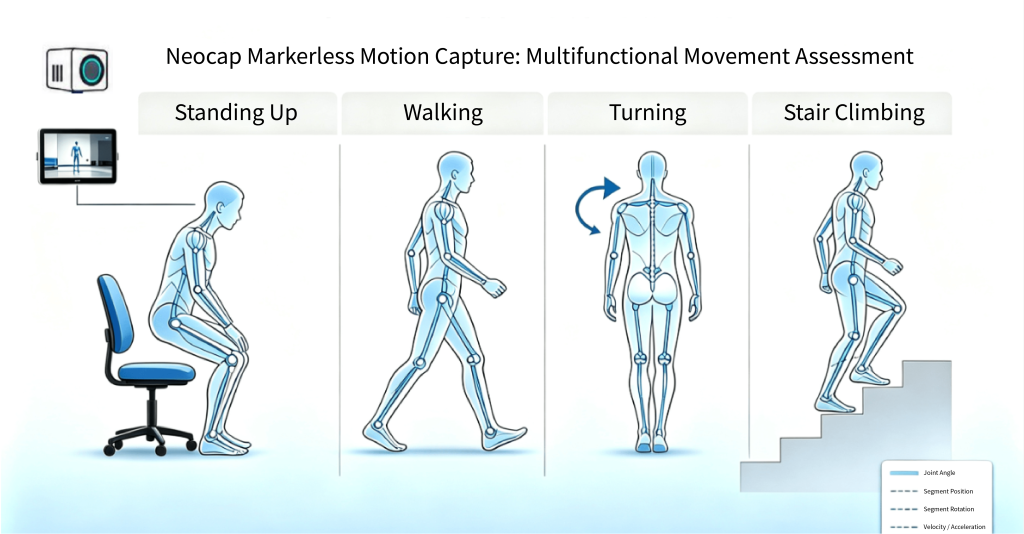
NeoCap markerless motion capture is a tool for motor function assessment. It rapidly captures human kinematic data without the need for markers or complex wearable equipment, providing a more natural and efficient quantitative approach for sports rehabilitation evaluation.
In sports rehabilitation, gait, balance, joint range of motion, postural control, and movement coordination have always been key indicators for assessing patient functional recovery.
Traditional assessment methods typically rely on manual observation, scale-based scoring, or marker-based motion capture. However, in outpatient clinics, rehabilitation departments, community rehabilitation, and geriatric assessment settings, lengthy preparation procedures, the burden of wearing equipment, and operational complexities can all affect testing efficiency and patients’ natural movement performance.
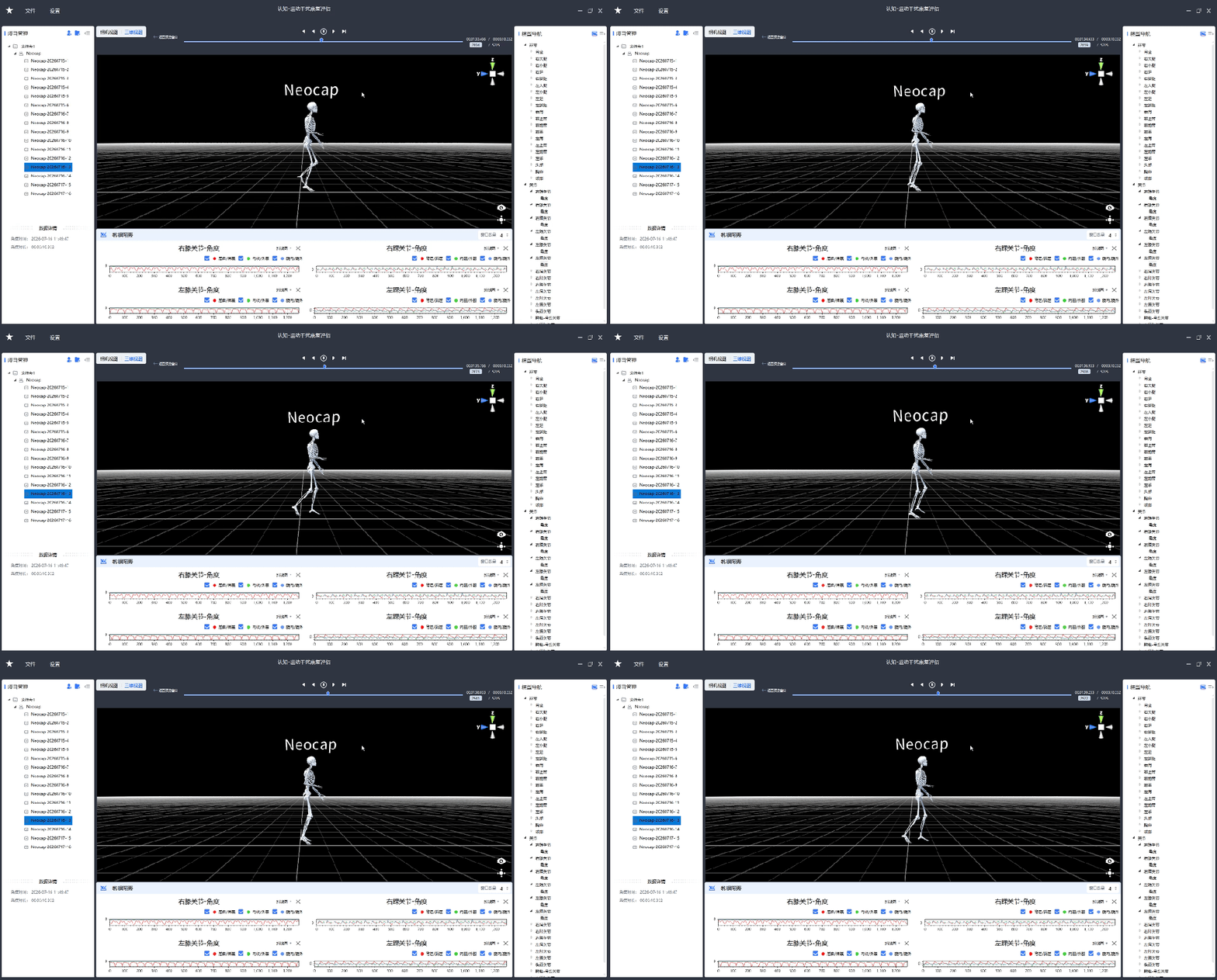
The NeoCap markerless motion capture system offers a new solution for such application scenarios. Subjects do not need to have markers attached or wear complex equipment; they simply perform natural movements in front of cameras. The system can then reconstruct a 3D human skeletal model and output key kinematic metrics including gait cycle, stride length, joint angles, and center of mass (COM) displacement.
Significantly Lowering the Barrier to Sports Rehabilitation Assessment
In many sports rehabilitation assessments, the real challenge is not whether “training has been performed,” but how to objectively determine whether the patient’s motor function has genuinely improved.
●Has the patient’s motor control ability improved?
●Is gait and balance more stable?
●Have joint range of motion and body coordination changed?
●Are functional movements such as standing up, walking, turning, and stair climbing safe?
For elderly patients and those with limited mobility, can the testing burden caused by marker attachment, equipment wear, and lengthy preparation procedures be reduced? Traditional marker-based motion capture can provide high-quality kinematic data, but it has high requirements for venue, personnel, preparation procedures, and subject cooperation.
For rehabilitation patients, the attachment of markers and wearing equipment can itself become an additional burden and affect their natural movement performance.
The core value of markerless motion capture lies in moving complex motion analysis processes into more realistic and convenient rehabilitation scenarios.
It does not merely reduce operational steps; more importantly, it allows patients to complete movement tests in a state closer to nature, making movement data more reflective of daily functional performance.
NeoCap Markerless Motion Capture System
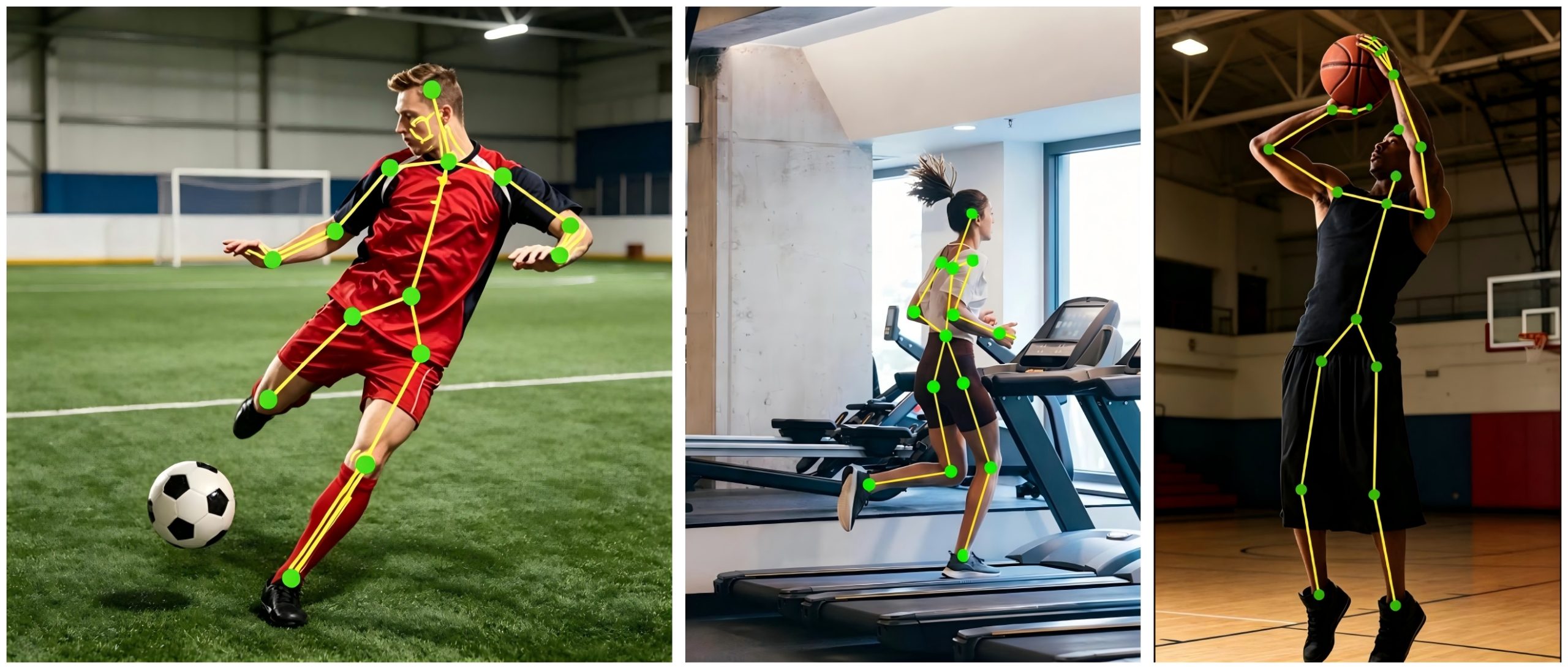
NeoCap is a markerless 3D motion capture system that uses multi-camera video acquisition to achieve 3D human skeletal reconstruction, supporting modeling of over 20 core body segments including the pelvis, limbs, head and neck, and thorax.
The system does not require subjects to wear reflective markers or motion capture suits. During testing, subjects simply perform movements such as walking, standing up, turning, and squatting within the camera capture range to obtain motion capture data.
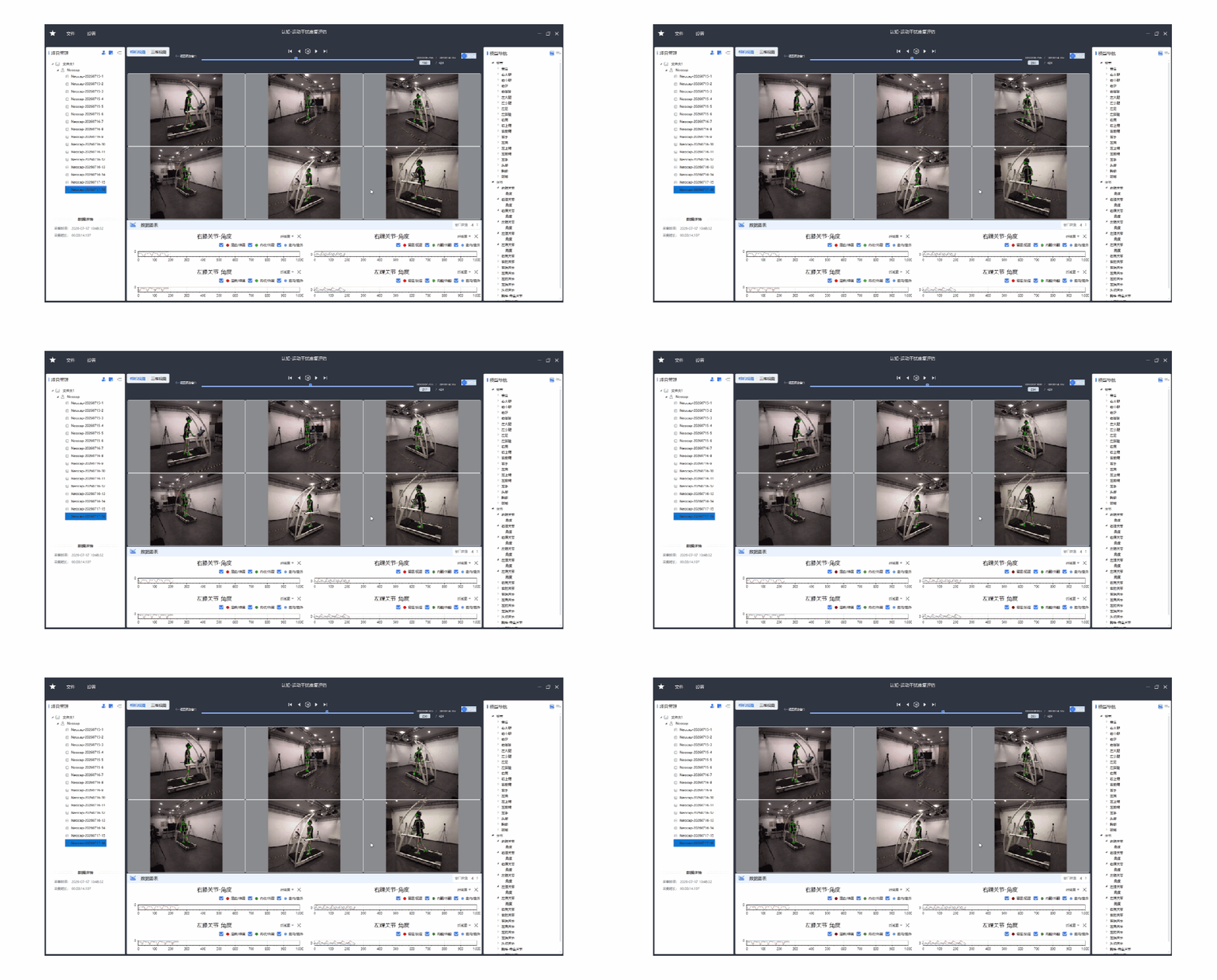
NeoCap supports joint angle calculation, multi-view video synchronized playback, frame-by-frame review, 2D joint keypoint overlay, and can export data in C3D format for further analysis with professional software such as Visual3D.
Application Case: Multimodal Motor Assessment in Hemiplegic Gait Rehabilitation
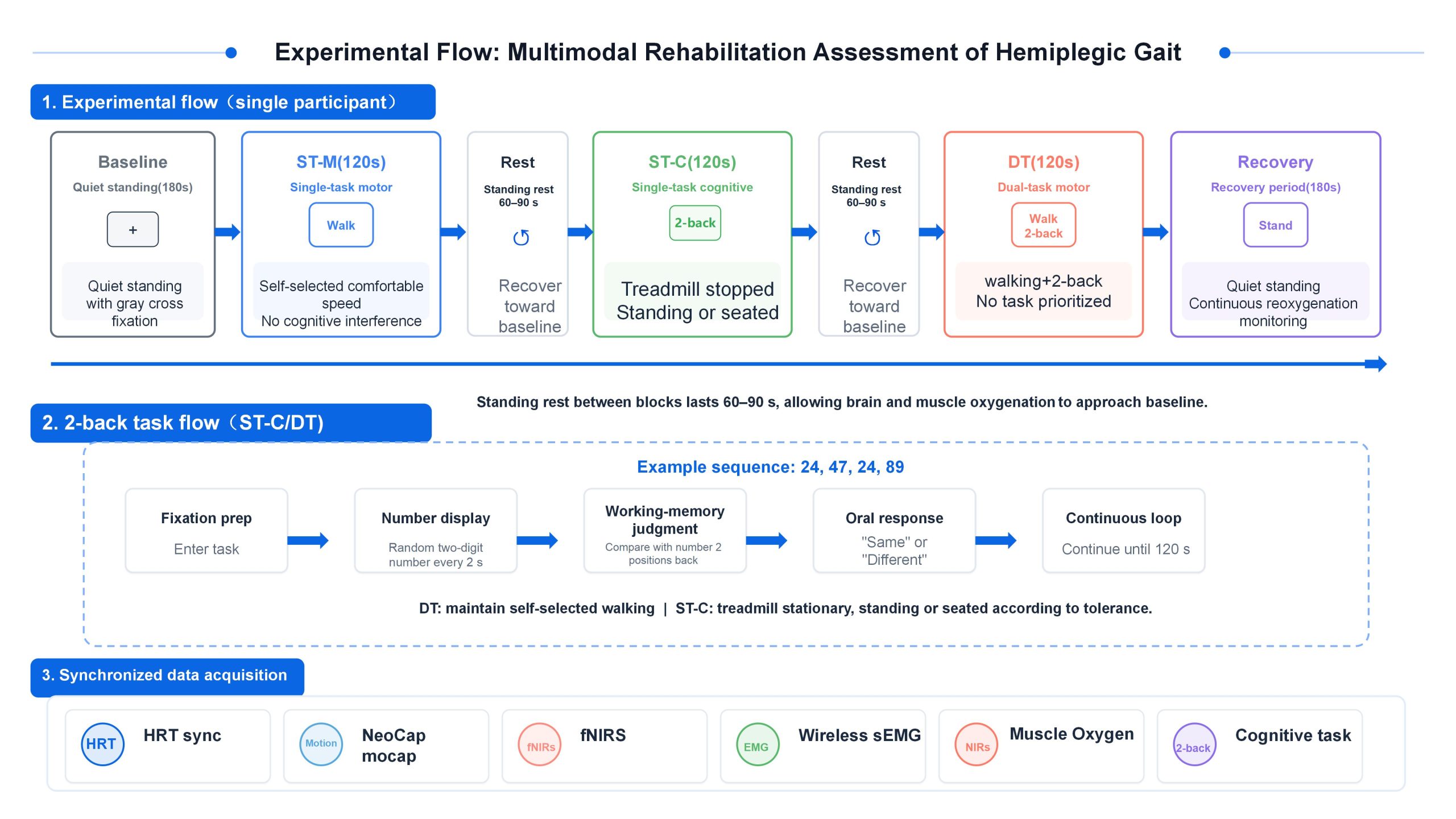
In a case assessing brain-muscle synergistic mechanisms and cognitive-motor interference in hemiplegic gait, NeoCap was used to capture patients’ gait kinematic performance under different task conditions.
The experiment employed a repeated-measures design across five phases: resting baseline, single motor task, single cognitive task, dual motor-cognitive task, and recovery period. Subjects walked on a rehabilitation treadmill at a self-selected comfortable speed, combined with a 2-back cognitive task, to observe the effects of cognitive load on gait control.
In this workflow, NeoCap was responsible for recording kinematic data, fNIRS was used to capture cerebral oxygenation changes, EMG for muscle activation, muscle oximetry for assessing local muscle oxygen supply-demand status, and the treadmill provided a standardized motor environment.
Multi-source data were synchronized under a unified timeline, providing a foundation for subsequent brain-muscle synergy analysis.
From “Seeing the Movement” to “Quantifying Movement Changes”
Clinical observation can identify whether a patient is limping, unstable, or showing obvious compensatory movements, but it is difficult to reliably answer more specific questions:
●Is the change in stride length consistent?
●Is the gait cycle more stable?
●Has the fluctuation of the center of mass decreased?
●Has the range of motion improved?
●Is motor control more symmetrical between left and right sides?
●Does gait performance significantly decline under dual-task conditions?
Data collected by NeoCap can be used to analyze gait cycle, stride length, walking speed, joint angles, COM variability, postural stability, and movement coordination.
Compared with relying solely on visual observation, these metrics enable rehabilitation assessment to be more repeatable and traceable.
Changes in a patient’s performance after a single training session, functional improvements across different treatment phases, and movement differences under various intervention protocols can all be compared through structured kinematic data.
Beyond Gait: Covering More Functional Movement Assessments
Sports rehabilitation assessment does not focus only on gait.
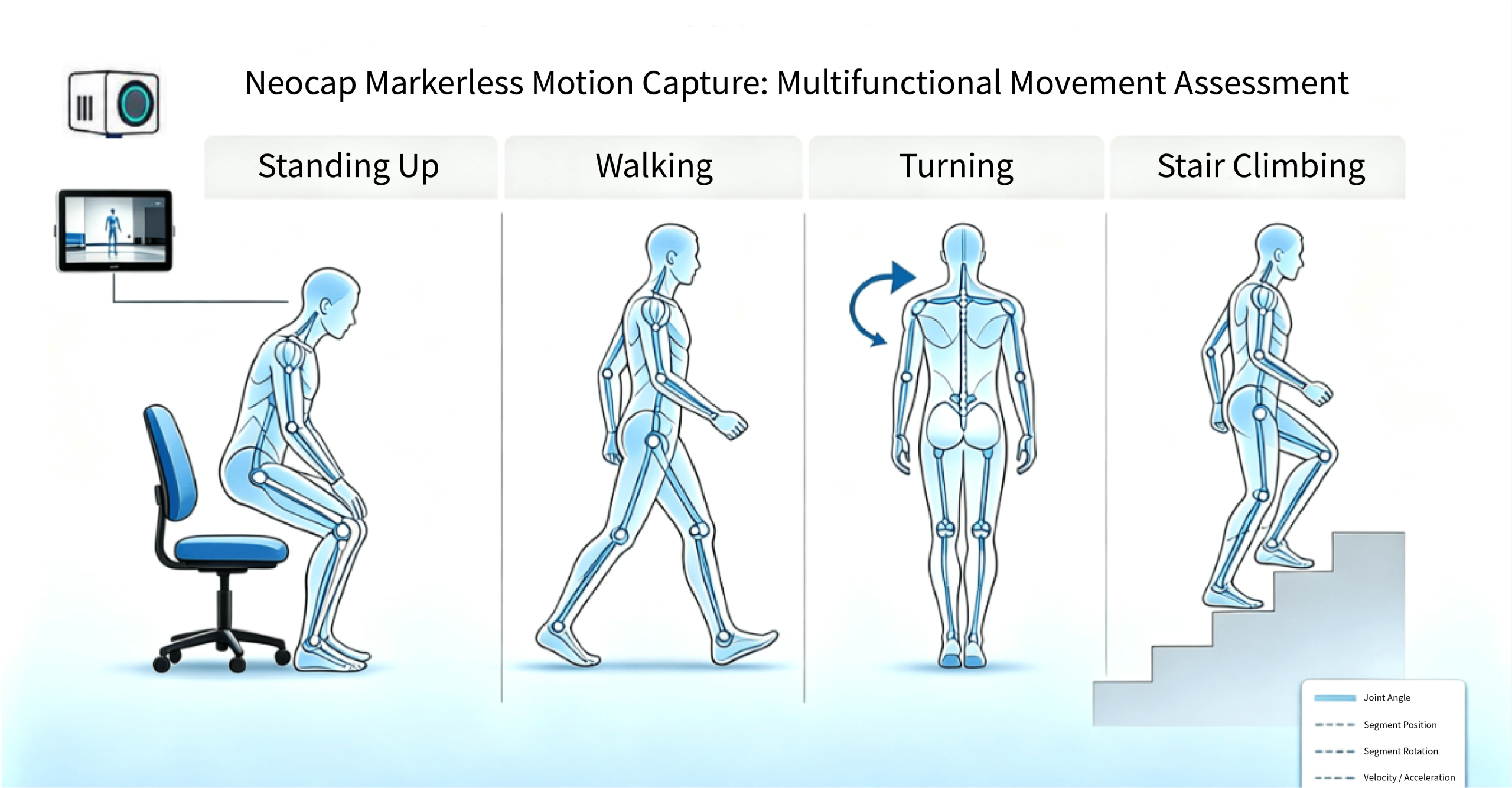
Elderly patients, neurorehabilitation patients, post-orthopedic surgery patients, and those with sports injuries often require assessment of multiple functional movements: sit-to-stand, turning, squatting, single-leg stance, stair climbing, upper limb elevation, trunk control, and balance adjustment.
These movements are often closer to activities of daily living than single-joint tests and better reflect patients’ true motor function.
The markerless capture approach of NeoCap reduces testing preparation burdens, making functional movement assessment easier to conduct in outpatient clinics, rehabilitation departments, community rehabilitation, and research experiments. For elderly patients and those with limited mobility, less equipment to wear, fewer markers to attach, and shorter preparation times all contribute to obtaining more natural and stable test performance.
Supporting Multimodal Rehabilitation Research: From Motion Performance to Brain-Muscle Synergy
Kinematic data alone can answer “what changes occurred in movement,” but in complex rehabilitation problems, researchers often need to further explain “why changes occurred.”
For example, in hemiplegic gait rehabilitation, a patient’s gait deterioration under dual-task conditions may not be solely due to lower limb weakness; it may also be related to cognitive resource占用, cerebral cortical compensation, decreased muscle activation efficiency, or insufficient local muscle metabolic capacity.
NeoCap can be synchronized with fNIRS, EEG, EMG, muscle oximetry, physiological sensors, and treadmills through the Human Research Tool (HRT) platform, enabling researchers to observe the synergistic relationships among “brain – muscle – movement” under a unified timeline.
This multimodal data fusion can help analyze:
●Whether gait stability decreases under cognitive load
●Whether prefrontal cortex and other brain regions show increased activation
●Whether lower limb muscle activation patterns change
●Whether muscle oxygen desaturation and reoxygenation processes are abnormal
Whether changes in motion performance are related to neuromuscular regulation. This moves sports rehabilitation assessment beyond mere external movement observation and further into the realm of mechanistic explanation.
From Motion Capture Data to Rehabilitation Decision-Making
The practical value of NeoCap is not just that “collection is more convenient,” but that it turns changes in motor function into quantifiable, comparable, and interpretable data.
For clinical rehabilitation, NeoCap helps therapists more objectively track the patient’s functional recovery process and determine whether training protocols have led to actual movement improvements.
For research experiments, NeoCap can be synchronized with cerebral oxygenation, EMG, muscle oximetry, and treadmill data, supporting various types of studies including hemiplegic rehabilitation, geriatric motor function assessment, neurorehabilitation, and sports injury recovery.
For community rehabilitation and outpatient screening, NeoCap’s markerless nature helps lower the threshold for testing, bringing high-quality motion analysis from specialized laboratories to a wider range of real-world application scenarios.
From marker-based complex acquisition to markerless natural assessment; from subjective observation to objective quantification; from single-movement recording to multimodal collaborative analysis — the NeoCap markerless motion capture system is making sports rehabilitation assessment more natural, more efficient, and closer to true functional performance.