
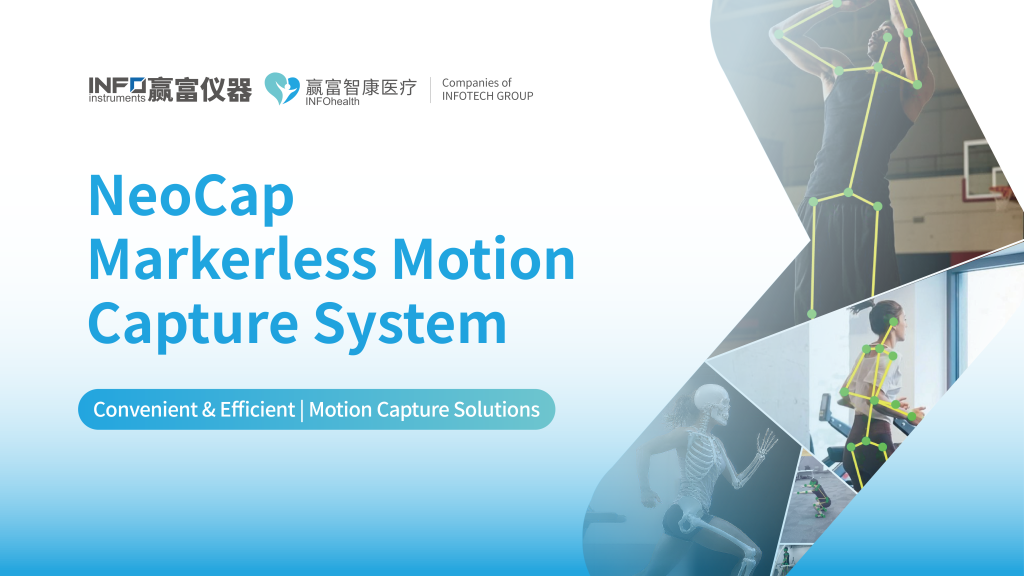
Step into the capture zone, and movement happens naturally—human motion data is becoming more authentic, easier to obtain, and easier to use.
Letting movement and posture occur naturally is what human motion data acquisition has always aimed for: subjects wear nothing at all, step into the capture area, and run, jump, squat, and lift as they normally would. The system works quietly in the background, recording the complete, authentic movement.
Markerless motion capture systems are moving in precisely this direction. Based on deep learning, they directly reconstruct 3D human motion from 2D images captured by cameras.
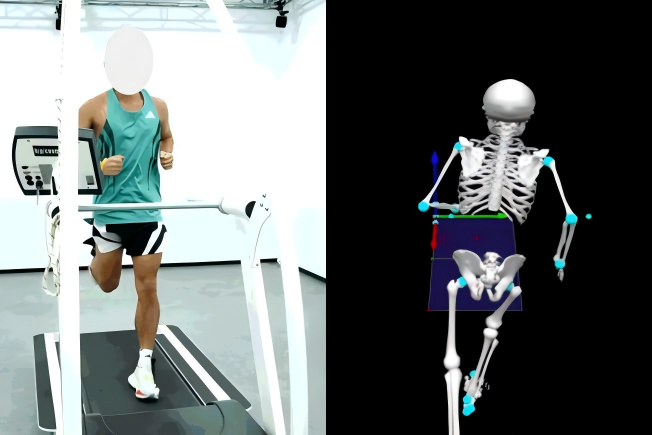
NeoCap has turned this into a complete system—3D reconstruction of 20+ joints, covering the pelvis, limbs, head and neck, thorax, and other core segments; one-click synchronized recording with camera arrays and multi-view playback; and collected data can be exported in the C3D international standard format, directly entering standard biomechanical analysis workflows.
What Exactly Has Markerless Changed?
The most direct benefit of the NeoCap markerless solution is that it makes “preparation” much lighter.
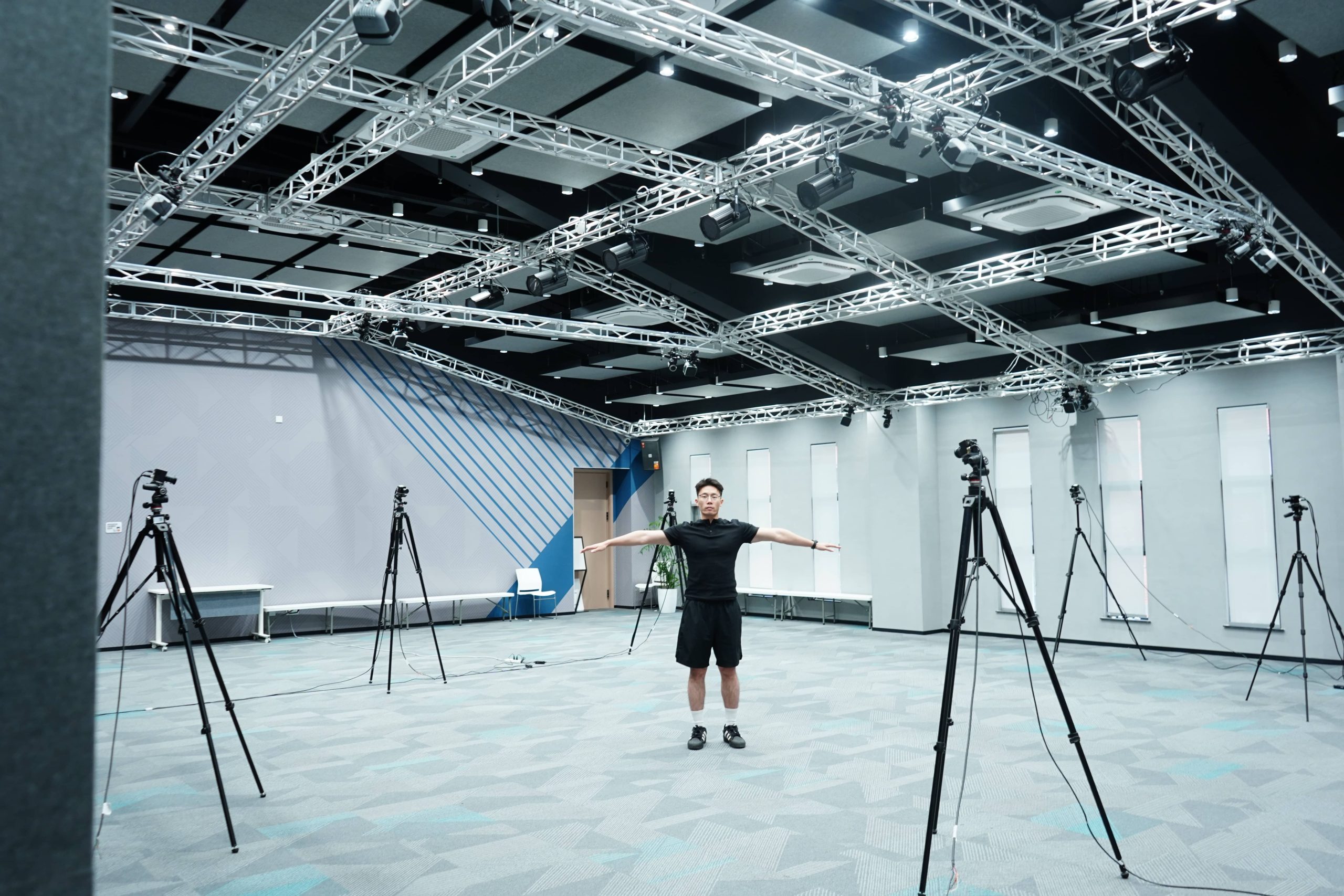
Cameras are easy to install, and high-precision calibration can be quickly completed with a combination of calibration objects. One-click synchronized recording across multiple cameras means acquisition goes from “starting at half an hour” to “capture upon entry”—once the equipment is set up, a person can walk in and begin.
Movement therefore becomes closer to reality. Without the presence of markers, people no longer subconsciously “brace” themselves; running, jumping, and turning all return to instinct, capturing complete movements in their natural state—which is also why professional sports and clinical research increasingly favor acquisition in real-world scenarios.
Easier preparation, more authentic movement, closer scenarios—letting movement be recorded where it is meant to happen.
Learn our Demo: Click here👈
Immersive Rehabilitation Training in VR CAVE
The core pain points of rehabilitation training: repetitive training is boring and tedious, leading to low patient compliance; traditional assessment relies on therapists’ subjective judgment, compensatory movements are difficult to identify, and rehabilitation outcomes are hard to quantitatively track.
Although head-mounted VR can create immersive scenarios, it blocks the real environment, disrupts proprioceptive visual references, and balance and gait training can easily trigger sensory conflicts and motion sickness.
The weight of the headset adds burden to the head and neck, interferes with the patient’s natural posture, and can easily produce compensatory movements, affecting the authenticity of rehabilitation assessment.
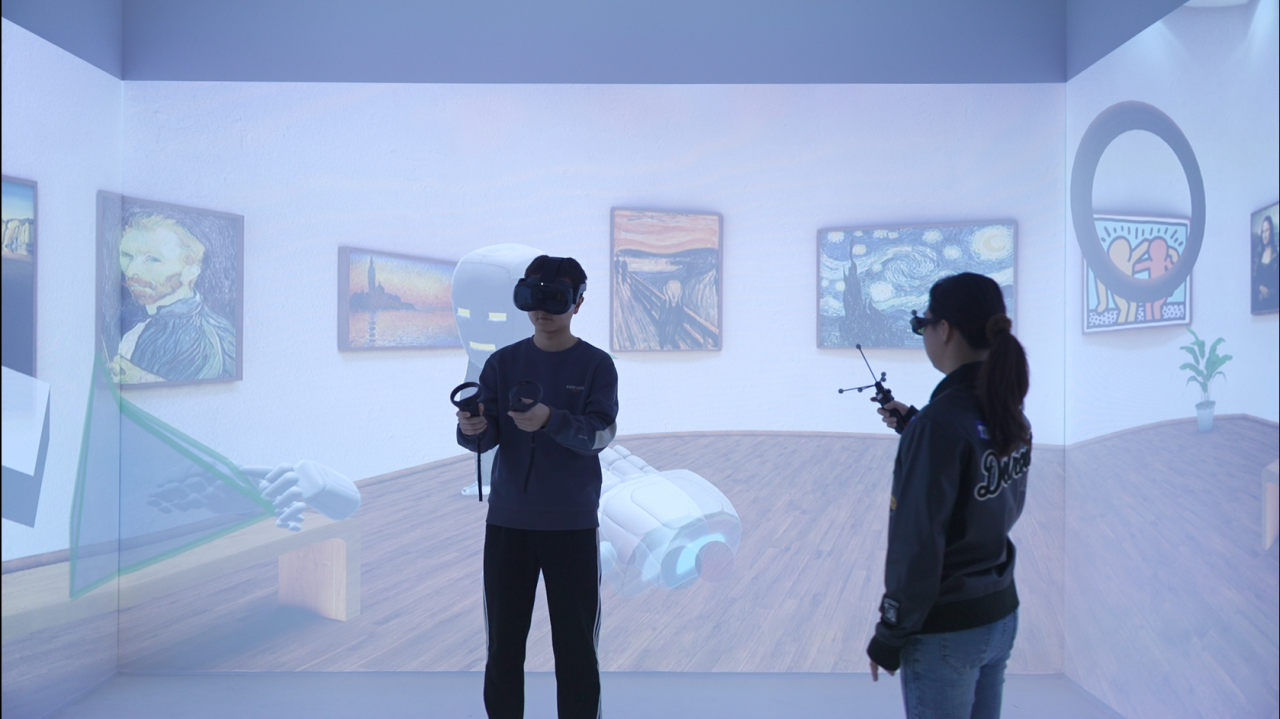
NeoCap leverages a VR CAVE immersive space for rehabilitation training. Wall and floor projections create a surround-style virtual environment, requiring no bulky headset and optionally paired with lightweight 3D glasses.
Patients are situated in a space where virtual and real coexist, able to immerse themselves in the training scenario while also seeing their own limbs and the on-site environment.
It reconstructs the full-body 3D skeleton in real time and outputs joint angles and motion trajectories. The virtual avatar and scene perspective respond synchronously with human movement. The system automatically calculates kinematic parameters such as ROM (range of motion) and joint range of motion.
Therapists can monitor in real time and review movement details frame by frame, assessing gait, balance, and motor control capabilities based on objective data.
Balancing immersion with real-space perception, training movements are closer to real-life states; gamified scenarios enhance training motivation, and rehabilitation assessment shifts from subjective description to traceable quantitative data, achieving an integrated solution of immersive rehabilitation training + objective kinematic assessment.
Sports Performance and Training Optimization
Coaches analyzing sprint posture and jump landings have traditionally relied mostly on experience-based judgment. But joints change extremely rapidly at the moment of landing, making it very difficult for the naked eye to see exactly where the problem is stuck.
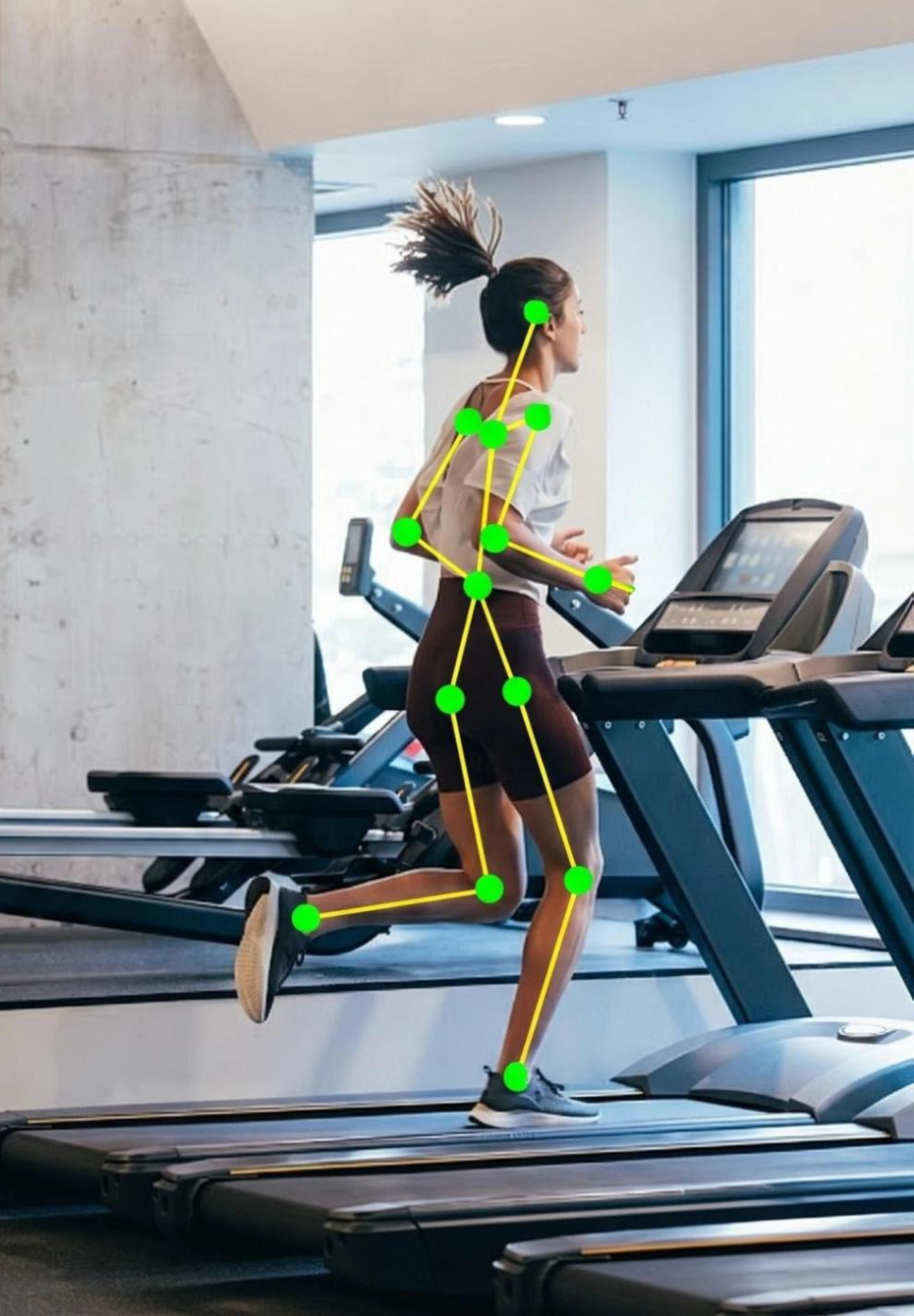
Athletes need no wearables. Camera arrays provide one-click synchronization and multi-view recording. NeoCap reconstructs the 3D posture of 20+ joints from 2D images and outputs a complete set of joint kinematic parameters—joint angles, positions, rotations, as well as velocity, acceleration, angular velocity, and angular acceleration.
Coaches can then review frame by frame and calculate angles across the three movement planes—sagittal, coronal, and horizontal—breaking down the landing sequence and joint angle changes step by step.
Because the devices can be quickly relocated, acquisition does not have to be completed in the laboratory—set up the cameras beside the training ground, capture and review on the same day, and complete large-scale acquisition of multiple subjects within a single day.
Sports Equipment R&D
What exactly does a pair of running shoes or a piece of protective gear change? R&D teams often only hear “it feels more comfortable” but cannot clearly explain what has actually changed.
NeoCap brings the comparison into the laboratory: subjects wear different equipment to complete the same movement while their 3D posture and joint angles are captured under both conditions, enabling a comparable, reproducible kinematic comparison.
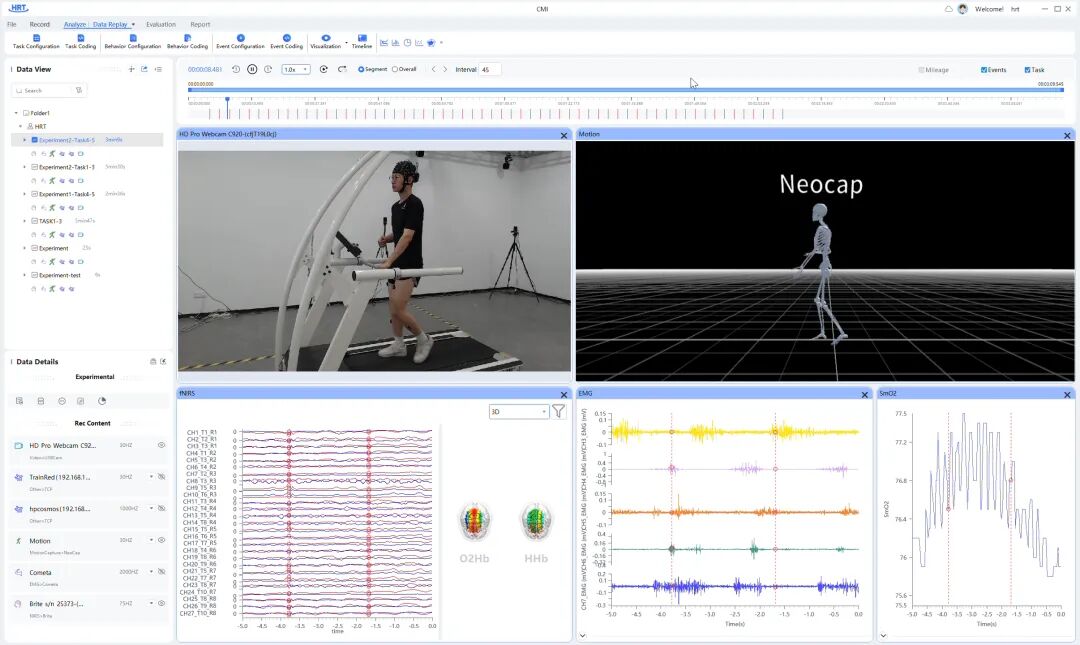
When deeper analysis is needed, force plates or treadmills can be integrated via the Human Research Tool (HRT) platform, incorporating ground reaction forces into the same timeline. The capture results are exported in the C3D standard format and directly enter biomechanical analysis platforms such as Visual3D, forming a standardized data workflow.
Design iterations are backed by data, solutions can be compared and reproduced, and the cost of trial and error decreases accordingly.
Film/Animation and Virtual Production
Let actors perform naturally without wearables, and their fluid body movements are fully recorded. NeoCap directly reconstructs 3D poses from 2D raw footage, completing 3D reconstruction of 20+ joints. The real-time data stream can directly drive virtual characters. Finally, it exports in the C3D international standard format, allowing motion assets to seamlessly enter subsequent production workflows and be retargeted to any digital character.
The equipment has a lightweight setup and fast calibration, so set changes and camera repositioning in the studio do not delay progress. Every bit of naturalness in the performance can be brought into the digital character.
From Acquisition to Implementation: Three Things NeoCap Got Right
· Let movements happen naturally first, then record them.
· Make data retainable, and also compatible with existing analysis workflows.
· Take acquisition out of the laboratory and back into real-world scenarios.
The NeoCap markerless motion capture system is redefining behavioral data acquisition in exactly this way.
It goes beyond recording movements; it can also integrate with multimodal data such as eye tracking, EEG, fNIRS, and facial expressions, driving the true implementation of multidimensional cross-analysis, so that every behavior in the real world can be naturally captured, systematically understood, and deeply analyzed.